
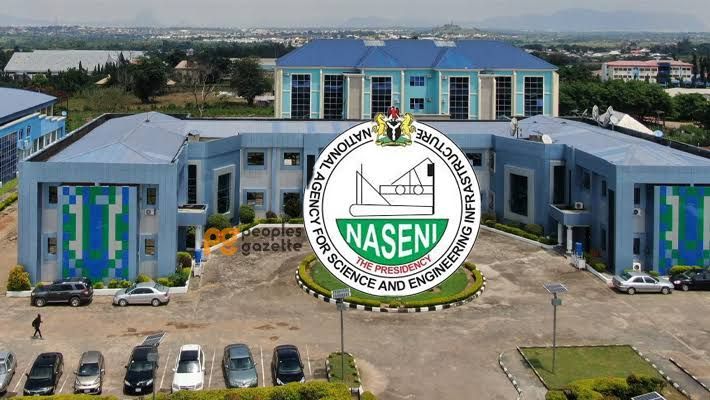
NASENI develops, introduces over 40 products
The agency is moving from theoretical frameworks to practical realities
The National Agency for Science and Engineering Infrastructure (NASENI) has developed and introduced more than 40 products spanning renewable energy, transportation, agriculture, healthcare, information technology, clean cooking and education.
The development came after three years of reformed designed to build stronger connection between research, manufacturing and the market.
The portfolio includes electric vehicles and tricycles, CNG conversion solutions, solar irrigation pumps, solar home systems, batteries, smartphones, tablets, laptops, televisions, rapid diagnostic kits and clean cookstoves.
NASENI Executive Vice Chairman and Chief Executive Officer, Khalil Halilu, said Nigeria already has the human capacity to create useful technologies.
The missing link, he argued, has been a system capable of taking viable ideas through development, financing, manufacturing and ultimately into the hands of consumers.
“Nigeria has capable engineers, researchers and innovators. What has often been missing is a connected system that can identify promising ideas, develop them, finance them, manufacture them and take them to the market,” Halilu said.
That approach has shaped NASENI’s innovation-to-industry pipeline, which begins with talent discovery and research funding before moving through incubation, product development, commercialisation and market access.
The agency’s intervention included financial support for researchers. In 2025, it awarded N229m in research commercialisation grants to 14 researchers working in agriculture, clean energy, healthcare, mobility and digital security.
Physical infrastructure is also being developed to support the industrialisation effort. NASENI is developing a 40-hectare Solar Industrial Park in Gora, Nasarawa State, alongside an electric vehicle assembly facility at Abuja Technology Village.
In Abuja, the agency has established CNG conversion and reverse-engineering centres, while solar-powered irrigation technology is being deployed through the Irrigate Nigeria Project.
Healthcare manufacturing is another part of the programme. The NASENI-Troment Rapid Diagnostics Factory in Abuja is being developed to support local production of medical diagnostic products.
The agency said its work has been strengthened by more than 50 local and international partnerships covering renewable energy, automotive technology, agriculture, healthcare, defence, aerospace and research.
The programme aligns with the Federal Government’s Renewed Hope Agenda, particularly its efforts to expand local manufacturing, reduce import dependence and commercialise technologies developed in Nigeria.
Although producing an innovation is only the beginning as the harder task is building factories that can operate sustainably, meeting required standards and ensuring that locally developed products can compete for consumers.
NASENI said its next phase will concentrate on scaling commercial production, increasing local content, improving standards and certification, raising factory utilisation and expanding market adoption.
Halilu said the agency’s performance should ultimately be judged by tangible economic outcomes rather than the number of ideas generated.
“The real test is whether our products are adopted, our factories operate sustainably, our partnerships transfer useful capabilities, our trainees secure livelihoods and more value remains within the Nigerian economy,” he said.
NASENI noted that while some of its factories and products are already operational, others remain at the development, testing or commercialisation stages.
Comments (0)
Comment policy →Be the first to comment.