
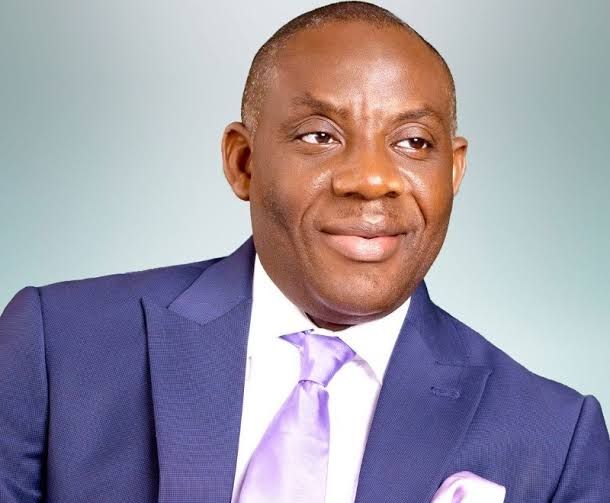
FG introduces virtual teaching in underserved schools
The Federal Government has introduced a virtual teaching programme aimed at providing pupils in underserved communities with access to qualified teachers, especially in schools experiencing shortages of subject teachers.
The Minister of Education, Dr Tunji Alausa, disclosed that the initiative, known as Inspire Live, would allow pupils in primary, junior secondary and senior secondary schools attend live and interactive lessons conducted by teachers through an online platform.
Alausa explained that the programme was designed to address the shortage of teachers in some parts of the country and ensure that children could receive lessons in subjects their schools might not have enough teachers to handle.
He spoke in an interview on Channels Television's Politics Today on Tuesday night where he discussed the Federal Government's efforts to use technology to improve education in Nigeria.
Giving an example, the Minister said pupils in Kaura Namoda, Zamfara State, who attend schools without English Language teachers, could connect to the platform and participate in lessons according to an organised timetable.
He explained that the arrangement would enable pupils to receive instructions from qualified teachers in other locations without having to wait for the government to recruit and deploy more teachers to their schools.
According to him, Inspire Live covers all subjects in the national curriculum, including English Language, Mathematics, Social Studies, Civic Education, Nigerian History, Physics, Chemistry and Biology.
The Minister added that pupils would not be restricted to live classes as the platform also provides recorded lessons they could access whenever they wanted to revise their work or catch up on missed classes.
He further disclosed that the Federal Government had partnered with the Nigerian Communications Commission (NCC) to provide free data access for students using the platform.
The arrangement, which involves zero-rated data, is expected to reduce the financial burden on parents and make it easier for children in rural communities to participate in online lessons without paying additional internet charges.
Alausa said the government was also working to ensure that pupils in communities with limited resources could benefit from the programme, although access to electricity and internet facilities remains a challenge in some areas.
Beyond providing virtual teachers for pupils, the Federal Government is also using digital platforms to improve the skills and professional capacity of teachers already working in schools.
The Minister identified another initiative called Ignite, a cloud-based platform that provides teachers with materials to prepare lesson plans, access curriculum information and improve their teaching methods.
He explained that the platform was designed to give teachers additional support and make it easier for them to prepare effectively before entering the classroom.
Alausa also disclosed that the government was running a Teacher Preparedness Programme aimed at supporting almost 50,000 teachers through professional training and development.
He said the programme was receiving positive responses from teachers, who were making use of the opportunities provided to improve their knowledge and teaching abilities.
The Minister's disclosure comes amid concerns over the shortage and uneven distribution of teachers across Nigeria, particularly in public schools serving large numbers of pupils.
Figures from the Federal Ministry of Education's Digital Nigeria Education Management Information System, obtained in August 2026, showed that 31,827,244 pupils in public schools were being taught by 592,077 teachers across the country.
The figures put Nigeria's national learner-teacher ratio at 53.8 pupils to one teacher, meaning that an average teacher is responsible for more than 50 learners.
Some states recorded even higher ratios, with Kano having 88 pupils per teacher, Katsina 87.4 and Imo 82.2.
The introduction of Inspire Live and other digital education programmes is part of the government's efforts to address the challenges facing the country's education system and improve access to learning for children in communities with inadequate teaching personnel.
Comments (0)
Comment policy →Be the first to comment.